Epoxy, vinyl plank, tile or carpet
What's the Best Basement Flooring in Toronto?
Short answer: for a basement on bare concrete that can get damp, a coated floor (moisture barrier, epoxy base, flake or solid colour) is the one that doesn't mind it. Nothing under it to rot or swell, and a spill wipes up.
But it isn't the best pick for every room. It's hard and cool underfoot. For a cozy TV room or a kids' play area where people sit on the floor, carpet or vinyl plank feels better, and we'll tell you that. Many basements end up with both: a coated floor in the gym, laundry and storage, something soft where you sit. Our own system is on our basement epoxy flooring in Toronto page.
The four floors side by side
| Floor | Good at | Watch for |
|---|---|---|
| Coated floor (epoxy + flake) | Damp slabs (moisture barrier on the concrete), spills, gyms, laundry, storage | Hard and cool underfoot; slippery when wet |
| Vinyl plank (LVP) | Warmer feel, looks like wood, family rooms and offices | Water that gets under it has nowhere to dry |
| Tile | Bathrooms and entries, handles water | Cold and hard; a slab crack can crack the tile |
| Carpet | Soft and warm: bedrooms, TV rooms, playrooms | Holds moisture, can smell musty; usually replaced after water |
Why damp decides it in a Toronto basement
Most Toronto and GTA basements sit on a concrete slab that pulls moisture up from the ground, more in spring and after heavy rain. Any floor you put down has to live with that.
That's why every basement floor we install starts with a moisture-barrier coat bonded to the concrete. LabSurface rates the barrier we use (LABPOX MVB FAST) to bond to damp concrete and to cut the moisture coming up through the slab from 25 to under 3 lbs per 1,000 sq ft a day. On the visit we check your slab with a moisture meter first.
What no floor fixes: water coming in. If water runs in through walls or cracks, or the basement floods, that gets fixed first (drainage, a sump pump or sealing the walls), whatever floor you choose. More in our guide to damp basement floors.
Vinyl plank (LVP): the popular pick, and its catch
Vinyl plank is warm enough, looks like wood and goes in fast. The planks themselves don't mind water. The catch is underneath: water that gets under a floating floor sits on the concrete with nowhere to dry, and that's where the musty smell starts. After water gets in, the planks often have to come up to dry the slab.
If you go with vinyl plank, ask your installer what goes between it and the concrete. If you later want a coated floor instead, the planks come up and any glue gets ground off.
Tile and carpet
Tile handles water well and lasts. It's cold and hard, heavy to put in, and a crack in the slab can crack the tile above it. Good in a basement bathroom or by the walkout door.
Carpet is the warmest and softest, which is why people still pick it for bedrooms and TV rooms. It's also the worst with damp: it holds moisture, can smell musty and is usually thrown out after a flood. If you want carpet, keep it to the driest room and fix any damp first.
Where a coated floor is the right call, and where it isn't
- Right call: home gyms (weights, sweat, rubber mats), laundry and utility rooms, storage and workshops, rec rooms that see boots, pets and spills, and any basement that has had damp before.
- Not the best pick: a bedroom, or a room where kids play on the floor all day. It's not warm or insulating. A big area rug on a coated floor works, or put carpet in that one room.
- Wet feet: a smooth coated floor is slippery when wet, like any smooth floor. Basements rarely get wet, so we don't add grip by default; a finer anti-skid additive is available on solid colour floors. More on anti-slip basement floors.
- Old floor in the way: tile, vinyl or carpet comes up first and the concrete is ground clean. See why we take tile up before coating.
A real basement we finished
Cabin Fever Flake Basement Floor in Toronto
Toronto · Feb 2025 · 450 sq ft
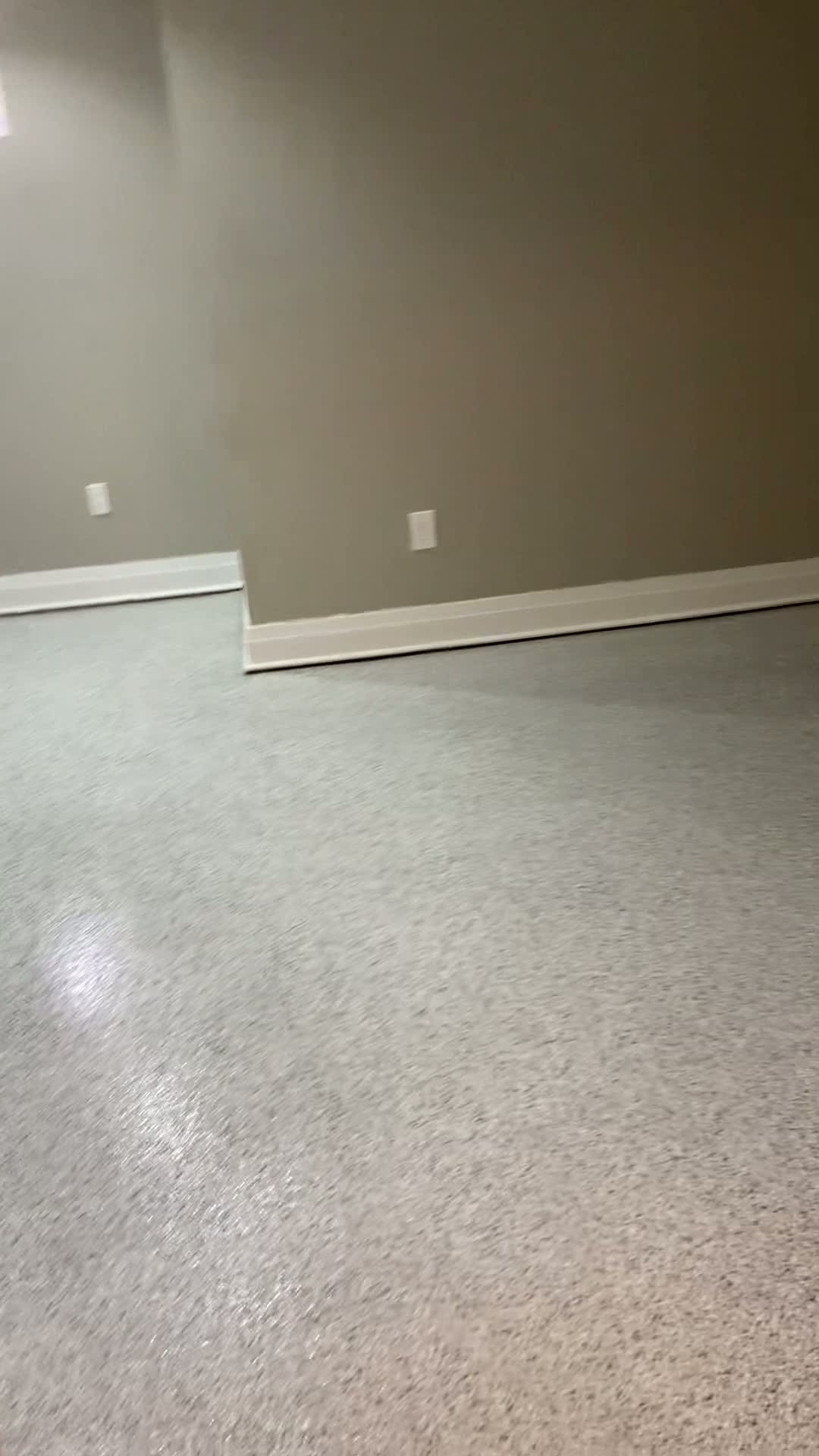
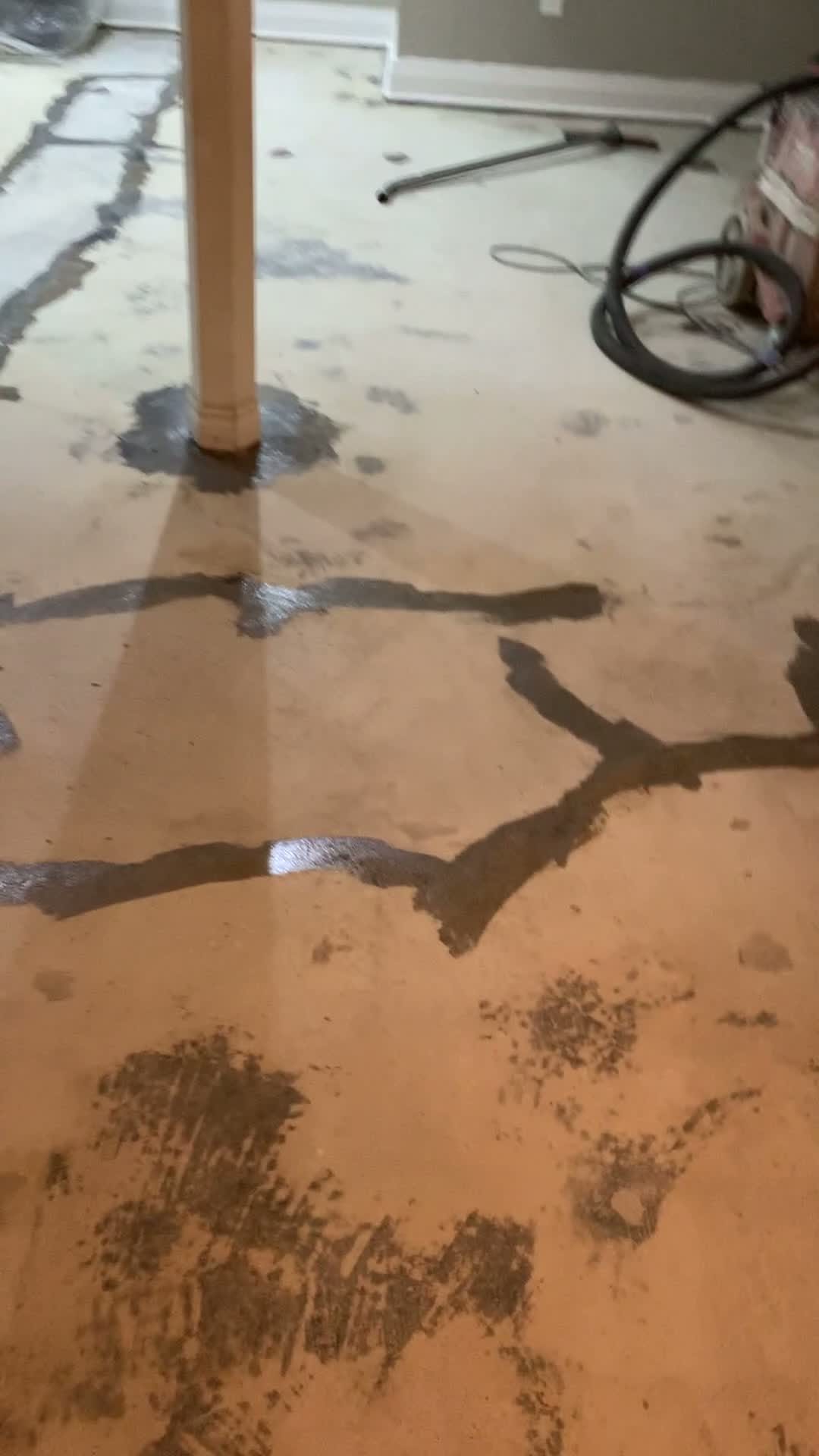
The slab had extensive dark brown and black stains. Cracks and surface damage were visible across the concrete from prior use and spills.
That Toronto basement
450 sq ft, February 2025. The slab had dark stains, cracks and surface damage from years of use. We diamond ground it, filled the cracks and pits, then a pigmented base coat, a full broadcast of Cabin Fever flake and a polyaspartic top coat. A sealed floor that wipes clean, ready for everyday use.
What a coated basement floor costs
Basement floors start from $10/sq ft, fully installed, so a 400 sq ft basement runs from $4,000. That includes grinding, crack repair, the moisture barrier, the flake floor and the polyaspartic top coat. Every floor is different; your exact price comes after we see photos or measure.
We don't install vinyl plank, tile or carpet, so we don't quote them; a flooring store can price those for the same room. When you compare, count the subfloor, pulling it up after water gets in, and how long each one lasts on a damp slab. Indoors, a coated floor lasts essentially for good, and it carries our 5-year warranty on homes. Full numbers in our epoxy flooring cost guide.
How a basement floor goes in
Visit and moisture check
We measure the room and check the slab with a moisture meter. Water coming in gets fixed first.
Grind and repair
Dust-extracting grinders and HEPA vacuums, with the room sealed off first, because edge work still makes some dust. Cracks get epoxy gel filler.
Moisture barrier
Bonded to the bare concrete, on every basement we do.
Epoxy base, flake, top coat
Your flake blend or a solid colour, then a polyaspartic top coat over flake.
Walk on it
Usually 3 days for the job. You can walk on it 24 hours after the last coat at room temperature, and basements are indoor work, so we do them all winter.
Questions about basement flooring
What is the best flooring for a damp basement?
A coated floor with a moisture barrier bonded to the concrete: nothing under it to rot or swell, and spills wipe up. If water comes in through walls or cracks, that has to be fixed first, whatever floor you choose.
Is epoxy better than vinyl plank in a basement?
On a slab that gets damp or has had water on it, yes: water that gets under vinyl plank has nowhere to dry. For a dry, cozy family room, vinyl plank feels warmer underfoot. Many basements use both.
Is epoxy warm enough for a basement?
It's hard and cool underfoot, not warm or insulating. Area rugs help, and for a bedroom or playroom carpet is the warmer choice.
Can you put epoxy over vinyl plank or carpet?
No. Vinyl, carpet and any glue come up and the concrete is ground clean, so the floor bonds to the slab.
How much does a coated basement floor cost in Toronto?
Basement floors start from $10/sq ft, fully installed; a 400 sq ft basement runs from $4,000. Every floor is different; your exact price comes after we see photos or measure.
Can you do a basement floor in winter?
Yes. Basements are indoor work, so we install them all winter.
Keep reading
Basement epoxy flooring in Toronto
Our basement system, room by room, and what it costs.
Can you put epoxy on a damp basement floor?
Damp vs wet, and what the moisture barrier does.
Basement floor designs
Flake blends and solid colours for a basement.
Basement floor levelling
When the slab is too rough or low for any floor.
Not sure which floor fits your basement?
Send us a few photos and the size of the room. We'll tell you honestly whether a coated floor is the right pick, and what it costs.