Polyaspartic or Epoxy for a Garage Floor in Toronto?
For a garage in a Canadian winter, polyaspartic is the better choice, and it's what we put in every garage. Road salt, slush and hot tires stay on top, it won't yellow in the sun from an open garage door, and it cures even in the cold (LabSurface rates its LabFast polyaspartic to cure below −10 °C).
Epoxy is what we use indoors, in basements and other rooms, with a clear polyaspartic top coat over the flake (or a T200 top coat on metallic floors). Garages are from $2,000 for a 1-car and from $2,800 for a 2-car, fully installed; basements start from $10/sq ft. Every floor is different; your exact price comes after we see photos or measure.
Last updated November 12, 2026


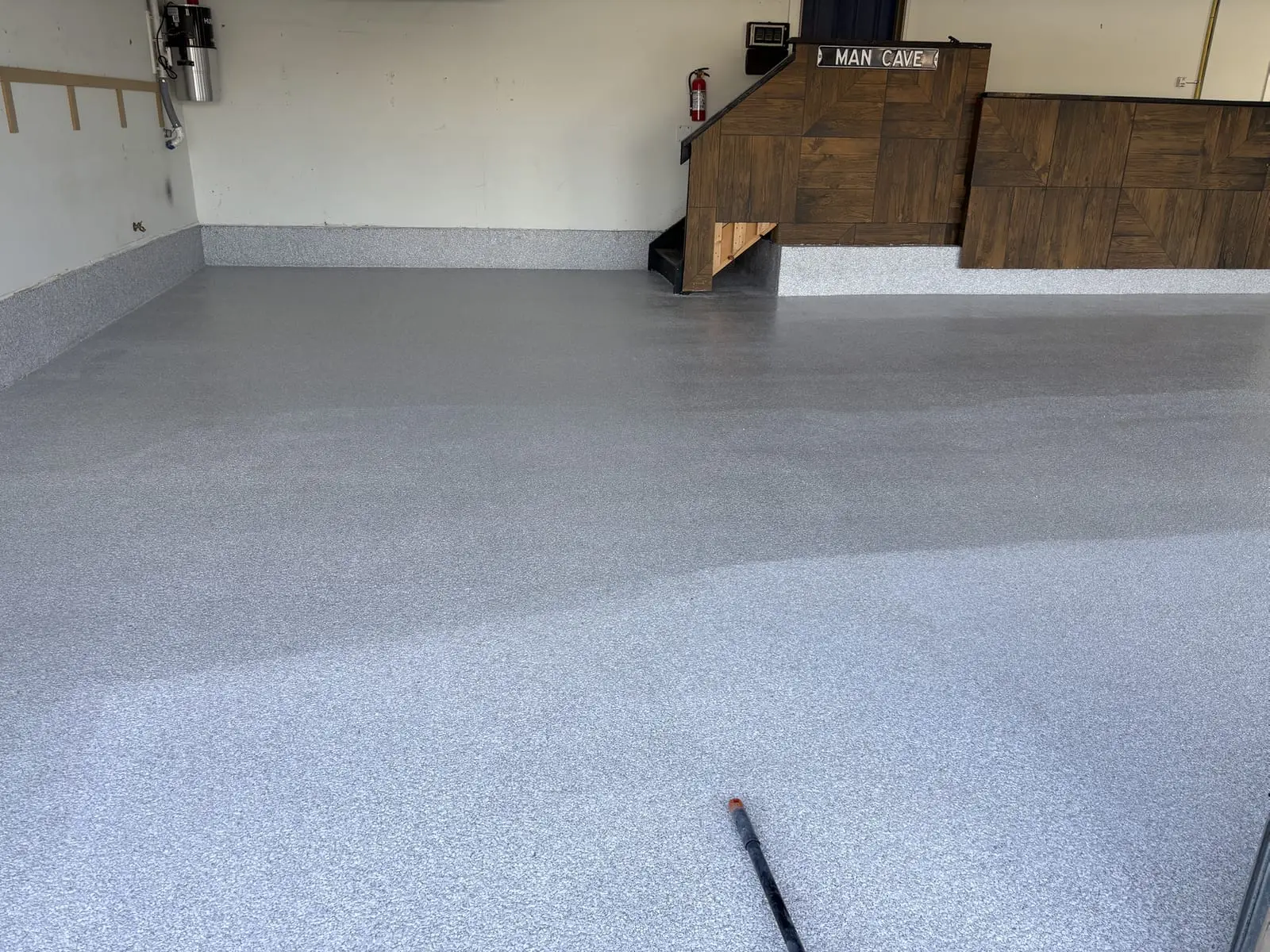
Polyaspartic vs Epoxy: How We Use Each
| Feature | Polyaspartic | Epoxy |
|---|---|---|
| Where we use it | Garages, top to bottom (base and top coat) | Basements and indoor rooms (base coats) |
| Cold weather | Cures even in the cold; we coat garages mid-March to mid-November, winter case by case | Needs a warm room; basements are heated |
| Sun and yellowing | Won't yellow | Can yellow in sun, so it stays indoors or under a polyaspartic top coat |
| Salt, slush, hot tires | Stays on top; what a garage needs | Fine indoors; not our choice for a garage |
| Looks | Full flake broadcast in any blend | Flake, solid colour, metallic, quartz |
| Price, fully installed | 1-car from $2,000 · 2-car from $2,800 | from $10/sq ft · metallic from $14/sq ft |
When to Choose Polyaspartic vs Epoxy in Toronto
Polyaspartic: Our Garage System
- Floors that see road salt, slush and hot tires
- Sun through an open garage door (no yellowing)
- Cures even in cold weather, so a late-season garage isn't a problem
- Every garage floor we do: grind, repair cracks, pigmented base, flake, clear top coat
Epoxy: Our Indoor System
- Basements, rec rooms, home gyms and offices
- A moisture-barrier coat under every basement floor
- Flake floors finished with a clear polyaspartic top coat
- Metallic looks, finished with a T200 top coat
So the answer to "which is better" depends on the room: polyaspartic in the garage, epoxy with a polyaspartic top coat indoors. Learn more in our polyaspartic flooring guide or see real jobs on our projects page.

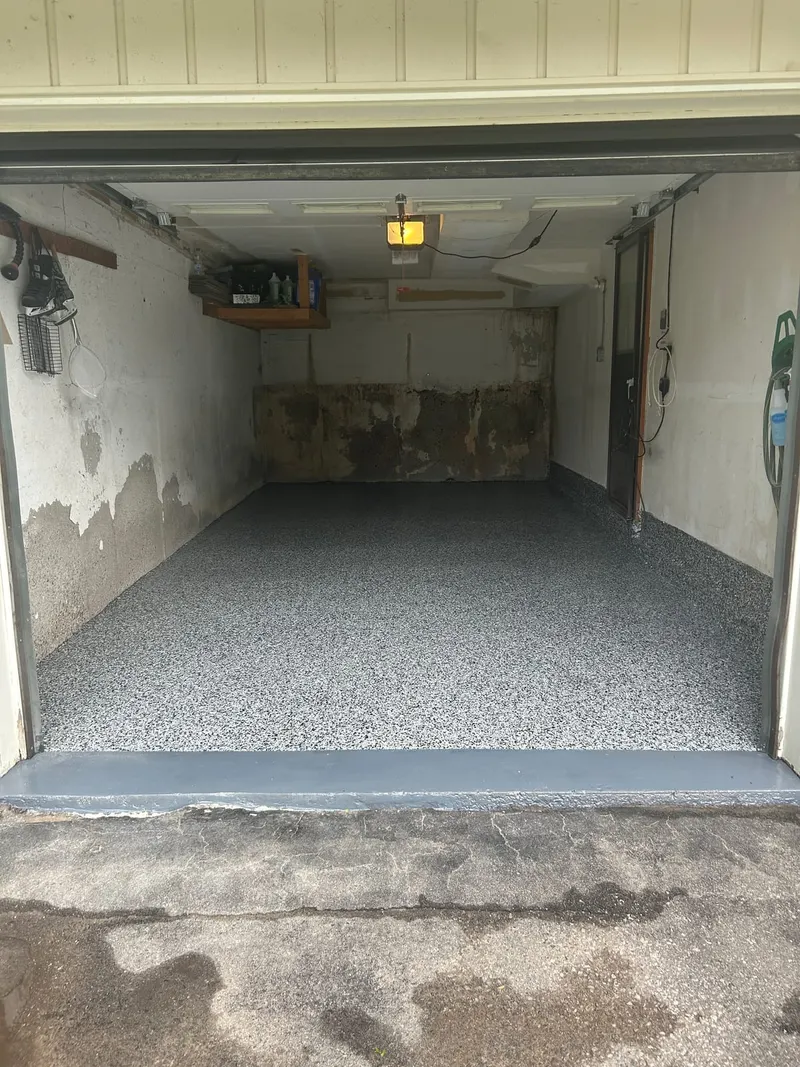
A real polyaspartic garage we finished
Pumice Flake Garage Floor in Keswick
Keswick · Oct 2026 · 500 sq ft


The slab in this Keswick garage had extensive cracking, dark oil stains, pitting, and patches of old coating or residue. The bare concrete looked worn and uneven.
FAQ: Polyaspartic vs Epoxy in Toronto
Is polyaspartic worth the extra cost?
In a garage, yes: polyaspartic is what we put in every garage, for the cold-weather cure, the salt and the sun. See what it costs for garages.
Can polyaspartic go over epoxy?
Yes. That's how we finish indoor flake floors: an epoxy base with a clear polyaspartic top coat.
Which lasts longer?
It depends on the room more than the product. Indoors, with no salt or water, a properly installed floor lasts essentially forever. In a garage, the edges where snowmelt sits can start to lift after about 5 years while the rest of the floor stays sound, and a live, moving crack in the slab will come back through any coating. Our floors carry a 5-year warranty. More on how long epoxy floors last.
Which handles Toronto road salt better?
Polyaspartic. Salt and brine stay on top of it, which is why it's our garage system.
Can I combine them?
Yes, indoors: epoxy base, polyaspartic top coat over the flake. Garages get polyaspartic top to bottom; see our garage projects.


Get the Right Coating for Your Toronto Project
Whether you need polyaspartic speed for a busy commercial space or epoxy value for your garage/basement—we'll recommend the best solution.
Use our cost calculator or view real Toronto installations in our gallery.